field notes
blairgowrie / observation / ongoing archive
LIVE ARCHIVE
FIELD NOTE /// THE THREE JUDGES /// 10/06/2026
3pm – 4pm
Arrived via Partick Station.
The short walk from the station to the pub was interesting in itself. Most of the people I passed appeared to be from Asian and other ethnic minority backgrounds. Stepping into the pub felt like entering a different social space entirely. The clientele inside were noticeably different from those using the surrounding streets. The contrast between the users of the pub and the users of the wider area was immediately apparent.
Inside, many customers were drinking alone. Despite this, the atmosphere was far from quiet. Conversations moved easily between tables and the bar. Discussions ranged from local places to eat, upcoming gigs and places people had travelled from. Blairgowrie unexpectedly entered conversation more than once.
The pub presents itself as a traditional real ale venue. Nine cask ales were available on tap. The interior is built around long-established pub design principles: bar stools facing the counter, large wooden booths and tables positioned to encourage conversation.
Outside the building, signs welcoming students are displayed in multiple languages. It feels like an attempt to make the venue accessible to a broader audience while maintaining its traditional identity. In a pub environment often perceived as intimidating or unwelcoming to younger generations, this stood out.
One customer in particular caught my attention. He sat alone in the elevated window seating area drinking a pint of Tennents and watching the street outside. The design of this part of the pub appears deliberate. The seating faces outward across a long trough-style table, creating a space for observation as much as social interaction. It felt designed for people who wish to be present without necessarily participating.
The pub also functions as a community space beyond drinking. Posters advertised a Monday night quiz beginning at 9pm alongside other regular events.
Of note, I ended up here on the recommendation of Zoey, manager of the Ericht Alehouse in Blairgowrie, who suggested it as a good place for a few pints before heading through to see Peter Hook later in the evening.
3pm – 4pm
Arrived via Partick Station.
The short walk from the station to the pub was interesting in itself. Most of the people I passed appeared to be from Asian and other ethnic minority backgrounds. Stepping into the pub felt like entering a different social space entirely. The clientele inside were noticeably different from those using the surrounding streets. The contrast between the users of the pub and the users of the wider area was immediately apparent.
Inside, many customers were drinking alone. Despite this, the atmosphere was far from quiet. Conversations moved easily between tables and the bar. Discussions ranged from local places to eat, upcoming gigs and places people had travelled from. Blairgowrie unexpectedly entered conversation more than once.
The pub presents itself as a traditional real ale venue. Nine cask ales were available on tap. The interior is built around long-established pub design principles: bar stools facing the counter, large wooden booths and tables positioned to encourage conversation.
Outside the building, signs welcoming students are displayed in multiple languages. It feels like an attempt to make the venue accessible to a broader audience while maintaining its traditional identity. In a pub environment often perceived as intimidating or unwelcoming to younger generations, this stood out.
One customer in particular caught my attention. He sat alone in the elevated window seating area drinking a pint of Tennents and watching the street outside. The design of this part of the pub appears deliberate. The seating faces outward across a long trough-style table, creating a space for observation as much as social interaction. It felt designed for people who wish to be present without necessarily participating.
The pub also functions as a community space beyond drinking. Posters advertised a Monday night quiz beginning at 9pm alongside other regular events.
Of note, I ended up here on the recommendation of Zoey, manager of the Ericht Alehouse in Blairgowrie, who suggested it as a good place for a few pints before heading through to see Peter Hook later in the evening.
FIELD NOTE /// FOLKFEST SUNDAY /// 07/06/2026
5pm –> 7pm
Sunday evening. Around twenty folk in the pub. Traditional Scottish and Irish music being played in the corner. The whole room seemed involved. People joining in with songs from tables and the bar rather than just sitting watching.
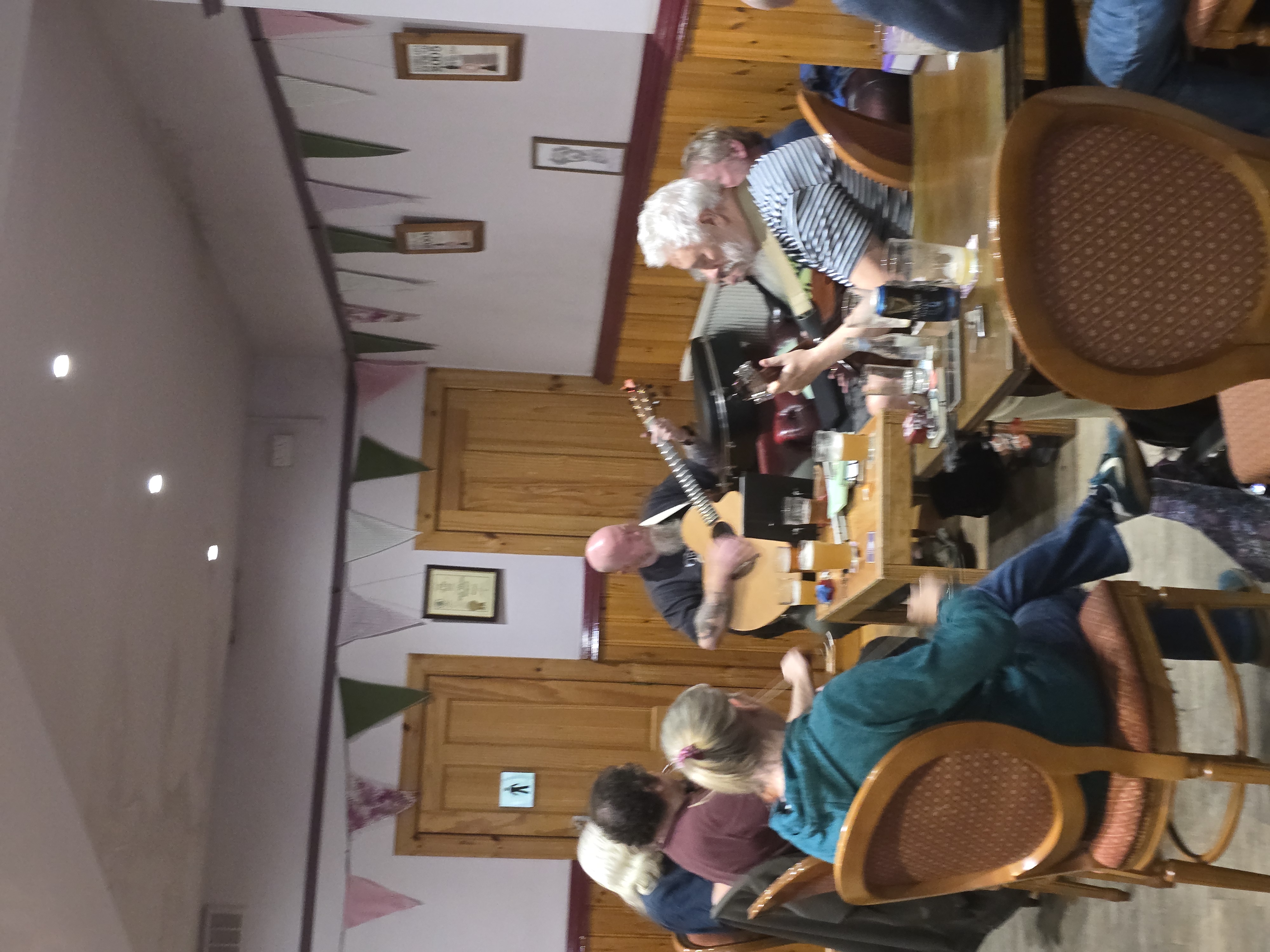 A Spanish visitor from Barcelona was sitting chatting with the disabled owner of the pub. It didn't feel unusual. Just part of the evening.
Spent a while talking to A reg about career plans, fourth year university and what happens after graduation.
The interesting thing about nights like this is how many different people end up sharing the same room. Locals, visitors, musicians, students and regulars all occupying the same space for a few hours. Outside, Blairgowrie was fairly quiet. Inside, the pub felt busy and social.
Nothing particularly dramatic happened. Just one of those evenings that reminds you why places like this matter.
5pm –> 7pm
Sunday evening. Around twenty folk in the pub. Traditional Scottish and Irish music being played in the corner. The whole room seemed involved. People joining in with songs from tables and the bar rather than just sitting watching.
Spent a while talking to A reg about career plans, fourth year university and what happens after graduation.
The interesting thing about nights like this is how many different people end up sharing the same room. Locals, visitors, musicians, students and regulars all occupying the same space for a few hours. Outside, Blairgowrie was fairly quiet. Inside, the pub felt busy and social.
Nothing particularly dramatic happened. Just one of those evenings that reminds you why places like this matter.
FIELD NOTE /// DIFFERENT RHYTHMS /// 05/06/2026
5pm –> 11pm
Volunteering shift at Perth Bike Station. A pal finished work later on and came through to Perth. We ended up hanging about for the evening. First stop was Wetherspoons, then the Old Ship Inn and Twa Tams. Perth felt quiet. Not completely dead, but quieter than expected for a weekend evening. Twa Tams was particularly flat. A few people in, but very little atmosphere. Later on we walked down the High Street. Most of the shutters were already down. There were only a handful of people about. The city centre felt as though it was already winding down for the night.
At around 8pm we ended up running for the train. Ten minutes later we were in Dundee. The difference was immediate. People standing outside pubs. Groups moving between venues. Taxis everywhere. Music coming from open doors. The streets felt busy and alive. We ended up in Groucho's, Club Bar and Phoenix before getting the 11pm bus back to Blairgowrie..
5pm –> 11pm
Volunteering shift at Perth Bike Station. A pal finished work later on and came through to Perth. We ended up hanging about for the evening. First stop was Wetherspoons, then the Old Ship Inn and Twa Tams. Perth felt quiet. Not completely dead, but quieter than expected for a weekend evening. Twa Tams was particularly flat. A few people in, but very little atmosphere. Later on we walked down the High Street. Most of the shutters were already down. There were only a handful of people about. The city centre felt as though it was already winding down for the night.
At around 8pm we ended up running for the train. Ten minutes later we were in Dundee. The difference was immediate. People standing outside pubs. Groups moving between venues. Taxis everywhere. Music coming from open doors. The streets felt busy and alive. We ended up in Groucho's, Club Bar and Phoenix before getting the 11pm bus back to Blairgowrie..
FIELD NOTE /// THE ERICHT ALEHOUSE /// 03/06/2026
7pm –> 8pm
Rainy Wednesday evening.
Outside the pub Blairgowrie feels unusually quiet. The streets are wet and there is little movement beyond passing cars.
Inside, the bar is calm. Two groups of visitors are present: a group of four English tourists and a group of five Americans. Two bar staff are working. One has recently finished their shift and is now sitting with a pint.
Slices of pizza from the chip shop next door are being passed around regular customers. Nobody appears to question it. It feels normal. A small act of community.
The fire is not lit as it would be in winter. Instead, fairy lights provide the atmosphere instead of flames. The effect feels almost performative. The room feels lighter and more open than during colder months.
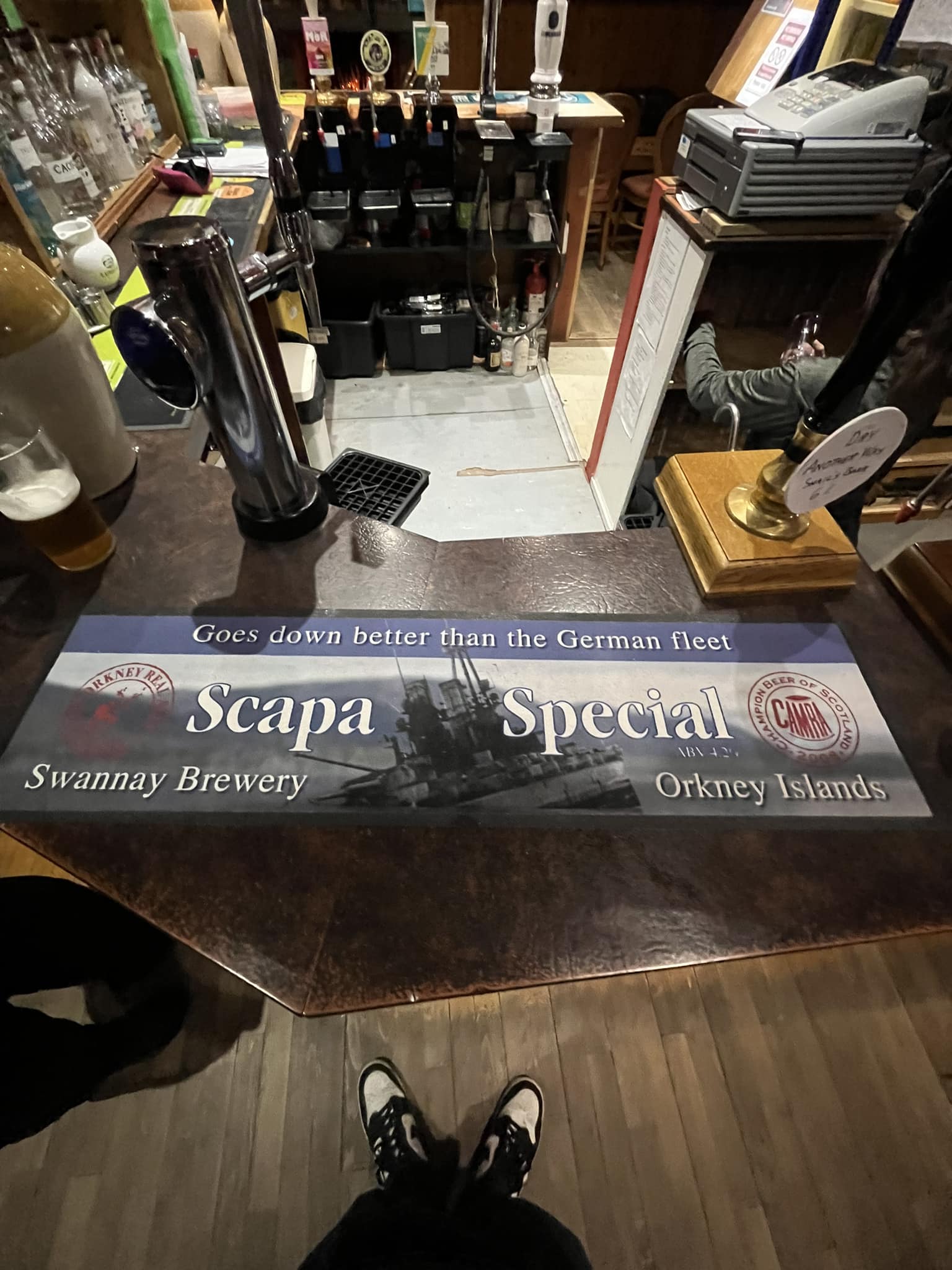
The pub itself is built around age and use. Worn wooden floors, an old wooden bar, leather couches and brewery beer mats covering the barspace. Among them is a Swanney Brewery mat advertising Scapa Special, an unexpected reminder of Orkney.
 The left hand room contains a piano, guitars and a ukulele. The instruments are not part of a performance. They are simply available, waiting for somebody to pick them up.
At approximately 1925, a local chip shop worker props up the bar talking with the barman. The conversation is unhurried. Around them, tourists, myself and regulars orbit the same space.
At approximately 1940, my two friends arrive by bicycle and stop for a pint unexpectedly. The meeting is informal and unplanned. For a short period they join the mix of tourists, staff and regular customers already occupying the pub.
The Ericht Alehouse functions as more than a pub. It acts as a meeting place where different groups briefly overlap within the same room.
7pm –> 8pm
Rainy Wednesday evening.
Outside the pub Blairgowrie feels unusually quiet. The streets are wet and there is little movement beyond passing cars.
Inside, the bar is calm. Two groups of visitors are present: a group of four English tourists and a group of five Americans. Two bar staff are working. One has recently finished their shift and is now sitting with a pint.
Slices of pizza from the chip shop next door are being passed around regular customers. Nobody appears to question it. It feels normal. A small act of community.
The fire is not lit as it would be in winter. Instead, fairy lights provide the atmosphere instead of flames. The effect feels almost performative. The room feels lighter and more open than during colder months.
The pub itself is built around age and use. Worn wooden floors, an old wooden bar, leather couches and brewery beer mats covering the barspace. Among them is a Swanney Brewery mat advertising Scapa Special, an unexpected reminder of Orkney.
At approximately 1925, a local chip shop worker props up the bar talking with the barman. The conversation is unhurried. Around them, tourists, myself and regulars orbit the same space.
At approximately 1940, my two friends arrive by bicycle and stop for a pint unexpectedly. The meeting is informal and unplanned. For a short period they join the mix of tourists, staff and regular customers already occupying the pub.
The Ericht Alehouse functions as more than a pub. It acts as a meeting place where different groups briefly overlap within the same room.
FIELD NOTE /// WHY THIS EXISTS /// 02.06.2026
This website began as an attempt to document the everyday geography of Blairgowrie & Surrounds from inside the town itself.
Most places are described from the outside: through tourism imagery, statistics or planning documents. This archive instead focuses on lived experience, routine movement, atmosphere, observation and community interaction.
The project developed alongside dissertation research, but also from years of cycling, working, walking and existing within the spaces being documented.
This website began as an attempt to document the everyday geography of Blairgowrie & Surrounds from inside the town itself.
Most places are described from the outside: through tourism imagery, statistics or planning documents. This archive instead focuses on lived experience, routine movement, atmosphere, observation and community interaction.
The project developed alongside dissertation research, but also from years of cycling, working, walking and existing within the spaces being documented.